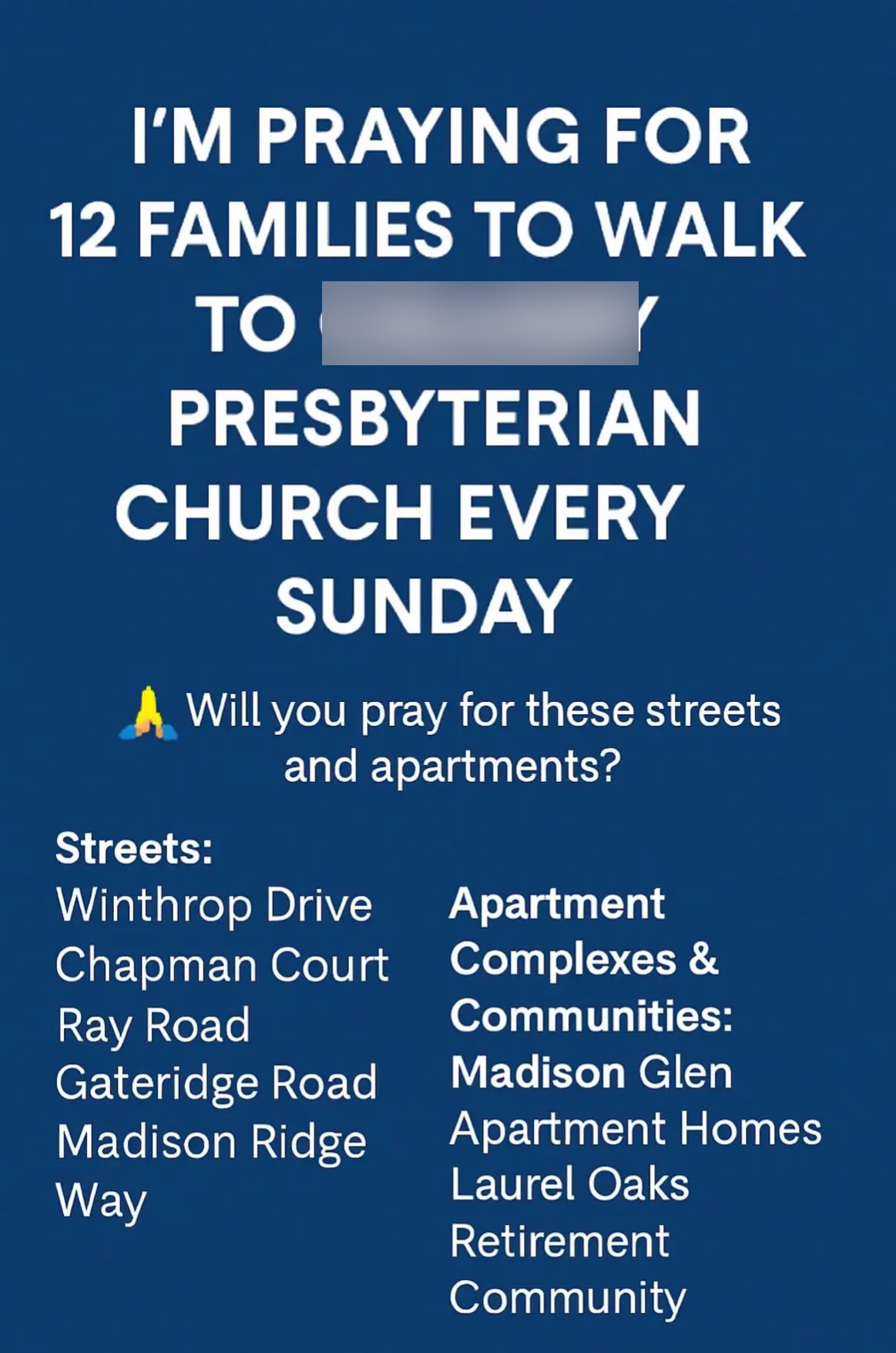
I saw this well-intentioned meme on Facebook one day recently. A pastor in my denomination was encouraged and excited about a plan he has for increasing attendance at his church, which is apparently surrounded by several neighborhoods. The strategy? Start praying for people within walking distance of the church to start walking to church. He was asking others to join him in this prayer initiative.
While it’s wonderful to want nearby neighbors to start coming to church, the problem with this strategy is that they aren’t coming. The percentage of American adults who attend worship services has dropped from 42 to 30%.
Why? For a wide variety of reasons, including:
> The COVID pandemic kept people at home, and many realized that they actually like leisurely Sunday mornings.
> Recent scandals, often related to sexual abuse, have lowered trust and credibility.
> Deconstruction has led some out of church. This is the questioning of what people have learned about Christianity. While some argue that deconstruction is a way of avoiding certain Biblical commands, others such as Scot McKnight argue that deconstruction is occurring for several very valid reasons, such as politicization of the church.
The bottom line is that if churches want to grow numerically, they will need to go to the people they wish to attract rather than wait for them to come to church. I met with one church plant in Knoxville that determined to not begin worship services before five missional communities were serving their neighborhood. I asked the pastor what he would say to more traditional churches of his city. “I’d say we’re glad they’re here, but Knoxville has voted with its feet, and only about 20% of the city wants to be in church on Sunday morning. Yet we all seem to be more interested in attracting the same 20%. As such, we’re doing church differently.”
 Mike Pollard